HATIL AR is an augmented reality application that allows shoppers to preview HATIL furniture in their own spaces before making a purchase.
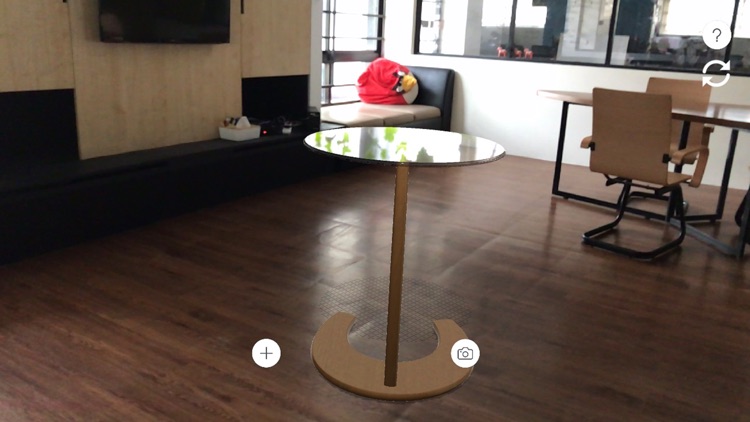
My Role: Lead Developer
Tech Stack: Unity3D, ARKit, ARCore, AWS S3, REST APIs
Platform: iOS, Android
Project Description
HATIL AR was an augmented reality application designed to help shoppers experience HATIL furniture in their own homes. Users could browse the product catalog, select furniture items, and place accurately scaled 3D models in their real environment through AR.
The goal of the project was to create a more realistic and confident shopping experience by allowing customers to visualize furniture size, placement, and appearance before visiting a store or making a purchase decision.
My Contribution & Technical Challenges
I worked as the Lead Developer and used Unity3D to develop the base application, excluding the creation of the 3D furniture assets themselves. I then handled cross-platform development to port the application to both Android and iOS, integrating the respective native AR libraries, ARCore and ARKit. My responsibilities included implementing the core AR experience, product browsing flow, asset-loading system, REST API integration, mobile deployment workflows, and in-app payment support.
One of the main challenges was keeping the app lightweight and scalable for both iOS and Android. The full 3D furniture catalog was too large to ship directly with the app binary, so we structured the application to include only a small set of base assets at install time. Additional furniture models were packaged as Unity AssetBundles and hosted on AWS S3, allowing the app to download assets on demand only when users needed them.
I also integrated backend REST API services to manage product metadata, catalog information, and update availability. This allowed the app to detect newly available furniture assets and present them to users for optional download without requiring a full app update.
Another part of my work was integrating in-app payment workflows while maintaining compliance with Google Play Store and Apple App Store policies. Alongside feature development, I focused on keeping the codebase modular and maintainable by applying software design patterns and writing testable components so the project could be extended later and handed over smoothly to other development teams.