Openhaus aims to make the home buying process fun and seamless by bringing real estate developers, interior designers and furniture & material manufacturers onto a single platform.
My Role : Core Developer
Tech Stack : C++, Unreal Blueprints, Nodejs, AWS Lamda
Platform : CloudStreaming(Hosted on AWS GPU instances), Windows
Project Description
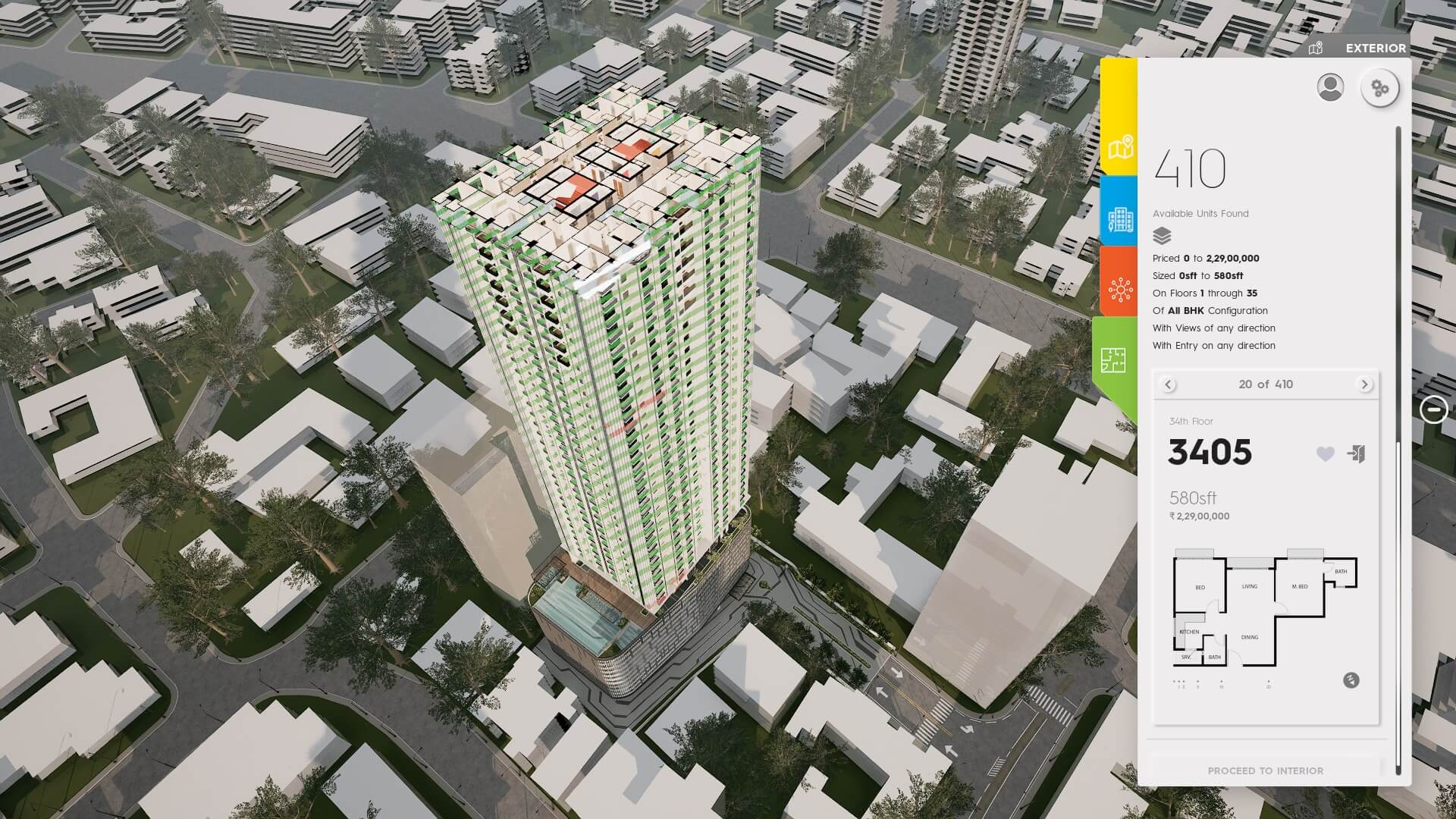
Openhaus was an end-to-end real estate visualization platform that created interactive 3D digital twins of properties under construction. The platform allowed buyers and sales teams to explore the location, building elevation, amenities, typical floor layouts, and individual units with mapped real-world views.
Built with Unreal Engine 4 and NVIDIA RTX, the application delivered photorealistic property walkthroughs that helped homebuyers make faster, more informed decisions without requiring repeated physical site visits. The platform was deployed in retail locations and event setups where users could interact with properties digitally, while the business could collect usage data and better understand customer behavior during demos and launch events.
One of the major engineering challenges was hardware availability. The Unreal Engine application required high-end GPU machines, but deploying expensive local hardware across multiple retail locations was not practical. To solve this, the platform adopted cloud streaming using AWS EC2 GPU instances, allowing users to access the experience remotely without needing powerful local machines.
My Contribution & Technical Challenges
As a core developer on the Unreal Engine/C++ application, I worked on the gameplay and interaction systems that powered the user experience. My responsibilities included implementing camera transitions, in-game navigation, gesture-based interactions, and user flow logic for exploring different parts of the property.
I also helped build dynamic in-game UI systems that displayed project and unit information synced from backend services. A key part of my work was integrating the Unreal application with backend systems through REST APIs. The application could fetch live project data from the server, update in-game content dynamically, and send user interaction events back to the backend for analytics and tracking.
Because the product was still in an MVP stage, scalability and adaptability were important design goals. I worked on structuring the UI and gameplay logic so features could be extended quickly as feedback came in from users, sales teams, and market testing.
I also contributed to deploying the Unreal Engine/C++ application on AWS EC2 GPU instances and helped build the backend orchestration needed to support cloud-based streaming. This included routing users to available GPU machines, reducing startup time, managing active sessions, monitoring idle instances, and shutting down unused machines to control cost.
By shifting from fixed hardware investment to on-demand cloud infrastructure, the platform became more scalable, cost-conscious, and easier to deploy across different retail and sales environments.